23.06.2025
Update on mTORUS
News from the mTORUS project: New perspectives on microbiome therapies for recurrent UTIs and results from the initial clinical study.
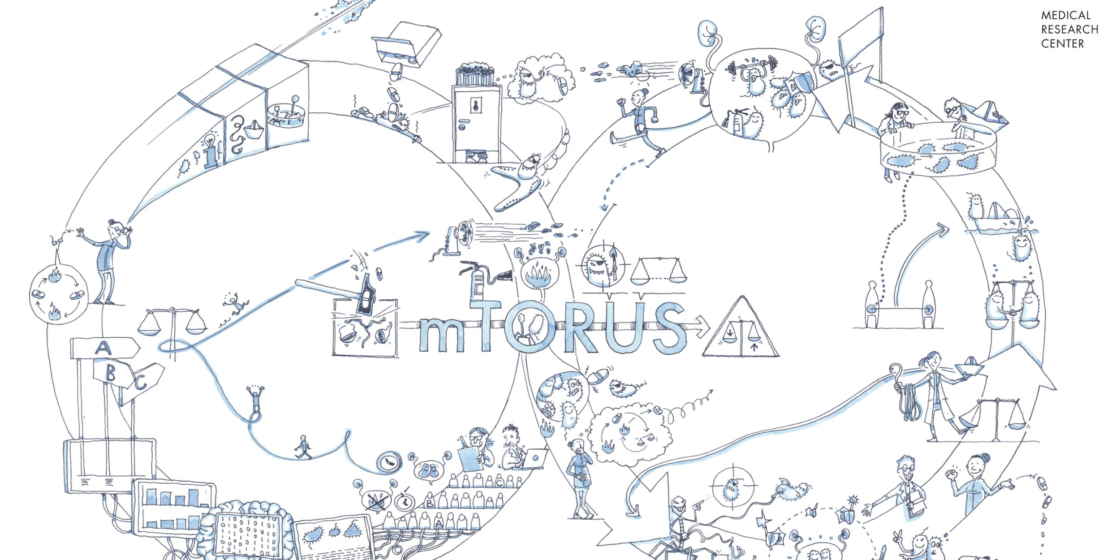
The mTORUS project, launched in mid-2023, is making significant strides in developing microbiome-based therapies for recurrent urinary tract infections (UTIs). By integrating engineered bacteriophages with microbiota transplantation, the interdisciplinary team has initiated a longitudinal study involving UTI patients and controls. This approach aims to reduce antibiotic dependence and tailor treatments to individual patient profiles, marking a promising advancement in precision medicine for UTI management.
The mTORUS project explores a new approach to treating recurrent UTIs, combining microbiome research, clinical expertise and data-driven methods. Based at Balgrist University Hospital, and involving research groups from ETH Zurich and the University of Zurich, the project seeks to move beyond conventional antibiotic treatment and investigate sustainable, personalized alternatives.
Central to the project is a two-step strategy: first, eliminating pathogenic bacteria using genetically engineered bacteriophages; and second, introducing beneficial bacteria into the bladder via microbiota transfer. The aim is to re-establish a healthy microbial community in the urinary tract and reduce the risk of reinfection over time.
To support this work, the project team has developed and refined procedures for collecting and analyzing clinical samples. In a validation study involving 66 participants, researchers examined how UTIs affect the composition of the bladder microbiome and the body’s metabolic responses. The findings show significant variability across individuals and underline the importance of standardization in sample processing to ensure reliable results.
In addition, the project is investigating how infections interact with the immune system. Using flow cytometry-based immunophenotyping, the team analyzed bladder biopsies and identified immune response patterns, including so-called type III immune responses typically associated with extracellular bacteria. These results may help inform new therapeutic strategies that go beyond pathogen elimination.
Data collected from clinical, microbiological, metabolic, and immunological analyses is brought together within a secure computing environment. Based on this information, researchers are developing models to better understand biological changes during infection and to support more individualized treatment decisions in the future.
The project has already led to early follow-up studies and is generating interest from a broad spectrum of disciplines, including infection biology, microbiome science, immunology, metabolomics, and data science. Collaborations across these fields are essential for addressing the complex nature of recurrent UTIs and for translating scientific findings into meaningful clinical applications. As research continues, mTORUS is contributing to a growing recognition that managing chronic infections requires more than simply eliminating pathogens—it requires understanding and supporting the underlying systems that maintain microbial and immune balance.
This work is particularly timely in light of increasing antibiotic resistance, which poses major challenges to global health. In this context, mTORUS offers an example of how alternative treatment strategies might look: ones that not only address acute symptoms but also promote long-term recovery and resilience. By focusing on the microbial ecology of the urinary tract, the project accounts for the intricate interplay between infection, immune responses, and microbial communities. This systems-level perspective allows researchers to investigate why some individuals recover fully while others experience repeated infections—and how interventions can be adapted accordingly.
This perspective also reflects a broader shift in medical research: away from one-size-fits-all treatments and toward more differentiated approaches that consider the individual biology, immune profile, and microbiome composition of each patient. Such thinking is at the heart of precision medicine, which aims to match the right therapy to the right patient at the right time.
mTORUS contributes to ongoing efforts to develop microbiome-based therapies in the context of precision medicine. As the project progresses, it may help pave the way for more personalized, sustainable, and effective care for individuals affected by recurrent UTIs.