04.12.2025
Precision Medicine – Progress Reaching the Clinic
The fourth annual event of The LOOP Zurich put the rapid developments in data-driven precision medicine center stage and demonstrated impressively how closely research and clinical application are now intertwined in Zurich
In their opening remarks, Beatrice Beck Schimmer, Director of University Medicine Zurich, and Annette Oxenius, Vice President for Research at ETH Zurich, emphasized how essential the close collaboration between partner institutions is for advancing precision medicine. Markus Rudin, Founding Director of The LOOP Zurich, built on this and outlined last year’s strategic milestones. He highlighted in particular the upcoming completion of the build-up phase of the Biomedical Informatics Platform (BMIP), which will consolidate high-quality medical data and make it accessible to researchers in a structured way.
In 2026, once the test phase is successfully completed, the BMIP will be made available to the entire research community of the 6 founder institutions of The LOOP Zurich. At the same time, new translational projects will be launched, existing incubator initiatives will be complemented by an additional project, and collaboration with all partner institutions will deepen. The integration of the UMZH biobanks will be further advanced, with the goal of connecting to national and European networks.
The program then shifted its focus to precision oncology projects. Thorsten Zenz presented the latest insights from INTeRCePT, one of The LOOP’s first-generation translational projects addressing optimized therapeutic approaches for treatment of blood cancers, in particular lymphomas. The multidisciplinary team, which has now been working together extremely effectively for several years, has achieved notable progress. This includes the establishment of large clinical cohorts, new single-cell workflows, comprehensive immunological characterizations, and initial results from a feasibility study in the CAR-T context. Their work demonstrates how tightly clinical observations and cutting-edge molecular profiling must be linked tailoring treatments more precisely.
A complementary perspective on the oncology data landscape was provided by the POLAR project, presented by Lopamudra Chatterjee and Christoph Messner. The goal is to create the most comprehensive proteomic reference for lymphomas to refine diagnostics and therapy decisions. The team is working with more than 2,500 samples and has established a semi-automated high-throughput proteomics platform that enables consistent analysis across numerous tissue types. Integrating these datasets into the growing BMIP illustrates how basic research and clinical application can work hand in hand to better understand molecular patterns and translate them into diagnostic and therapeutic value.
With the AI Tumor Board, Andreas Wicki offered a glimpse into how artificial intelligence may support future therapy decisions—not as a replacement for medical expertise, but as a precise and data-driven complement. The main challenge lies in the sheer volume of data now generated in oncology. The Tumor Board is developing models that merge clinical, genetic, and molecular information and benchmark them against international guidelines. Using multilingual language models, large clinical datasets, and new approaches in prognostic modeling, the team is building a system designed to combine evidence-based decisions with data-driven recommendations, further sharpening precision in cancer care.
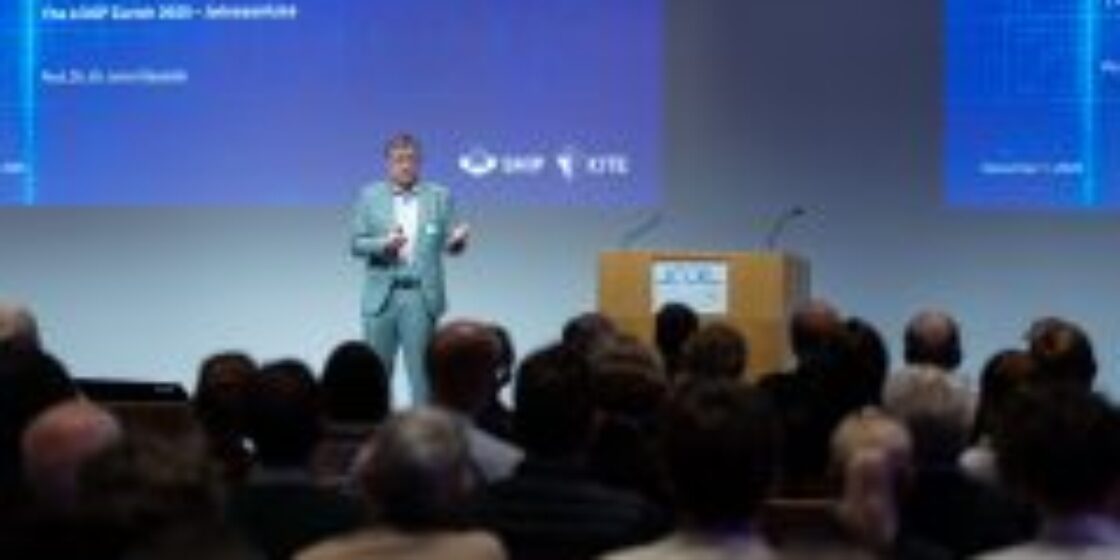
In his keynote lecture with the title ‘From Code to Clinic’ Jens Kleesiek, Director of the Institute for Artificial Intelligence in Medicine at University Hospital Essen. demonstrated how far the integration of artificial intelligence has already progressed in the Ruhr region. Kleesiek described an environment in which AI is not primarily a research tool but is directly embedded in everyday clinical practice—integrated into the hospital information system, diagnostic workflows, and decision-making processes. Research follows as a second step and is always guided by a clearly defined clinical question. His talk was both entertaining and profound, full of vivid examples and gave a clear perspective on how AI can deliver real benefits for patients. Many of the developments he described suggested that similar steps are achievable in Zurich—and that now is the right time.
The evening concluded with an Apéro riche worthy of its name, underscoring how strongly The LOOP Zurich is now perceived as a platform for exchange and shared vision. The many conversations made clear that precision medicine in Zurich is no longer just a promise for the future—it is steadily and measurably arriving in clinical practice.