
LOOBesity
Stress and Obesity – A Health Risk
Problem: An altered glucocorticoid metabolism increases the risk of metabolic and cardiovascular comorbidities in people with obesity.
Goal: To develop personalized treatment strategies for patients with obesity and specific metabolic risk profiles.
Metabolism / Energy Balance
LOOBesity in a Nutshell
Stress and obesity: An underestimated risk
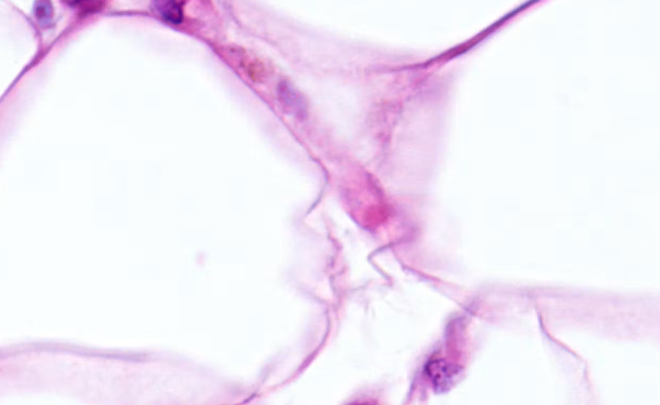
- Investigates the link between stress hormone metabolism and obesity
- Develops personalized treatment strategies rather than focusing on calories alone
- AI-supported decision aid for GLP-1 therapies already in use at USZ
- New CT method measures brown adipose tissue activity – more cost-effective than PET
Obesity is a widespread chronic disease that is often accompanied by high blood pressure, diabetes, and other metabolic complications. Lifestyle-based interventions often fail to have a lasting effect, and treatment decisions have so far been based only to a limited extent on reliable predictors of individual treatment response.
LOOBesity takes a precision medicine approach to close this gap. It focuses on patients with increased glucocorticoid metabolism – a pattern that is often linked to chronic stress and associated with a higher risk of comorbidities. The goal is to create individual risk profiles by combining molecular, imaging, and data-driven analyses and to derive personalized treatment recommendations from them.
Significance for Medical Research
LOOBesity strengthens Zurich as a research hub for clinical obesity research and precision medicine in metabolic diseases. The project shows how precision medicine approaches can be translated into clinical care by integrating clinical data, molecular analyses, modern imaging, and artificial intelligence.
By systematically linking molecular analyses, modern imaging, and AI-based decision models, the project contributes to the development of new, data-driven treatment approaches that go beyond established standard treatments.
The project brings together complementary expertise in endocrinology, radiology, epidemiology, and computer science and fosters close collaboration across institutional boundaries. The analysis pipelines, biobanks, and clinical decision aids developed create a sustainable infrastructure that can also be used for future research and healthcare projects.
LOOBesity thus positions Zurich as a strong center for translational obesity research and makes an important contribution to the development of personalized treatment strategies for metabolic diseases.
Metabolism / Energy Balance
The Consortium

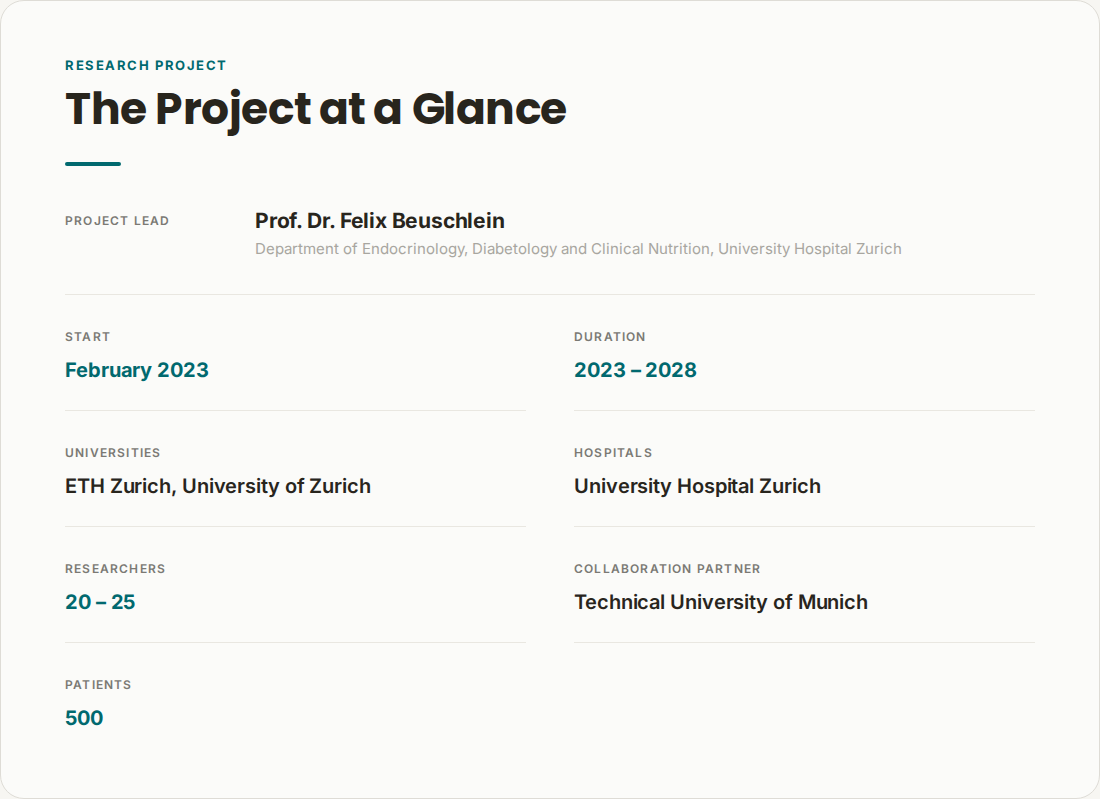
Felix Beuschlein, University Hospital Zurich, Department of Endocrinology, Diabetology and Clinical Nutrition.

Katrien De Bock, ETH Zurich, Department of Health Sciences and Technology.

Thomas Frauenfelder, University Hospital Zurich, Institute for Diagnostic and Interventional Radiology.
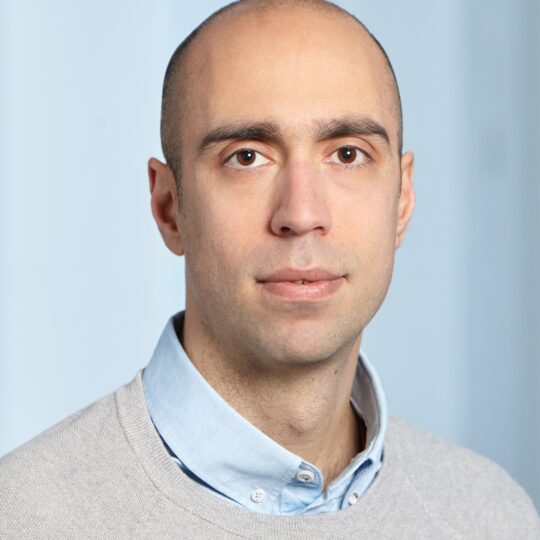
Ender Konukoglu, ETH Zurich, Department of Information Technology and Electrical Engineering.

Milo Puhan, University of Zurich, Epidemiology, Biostatistics and Prevention Institute.