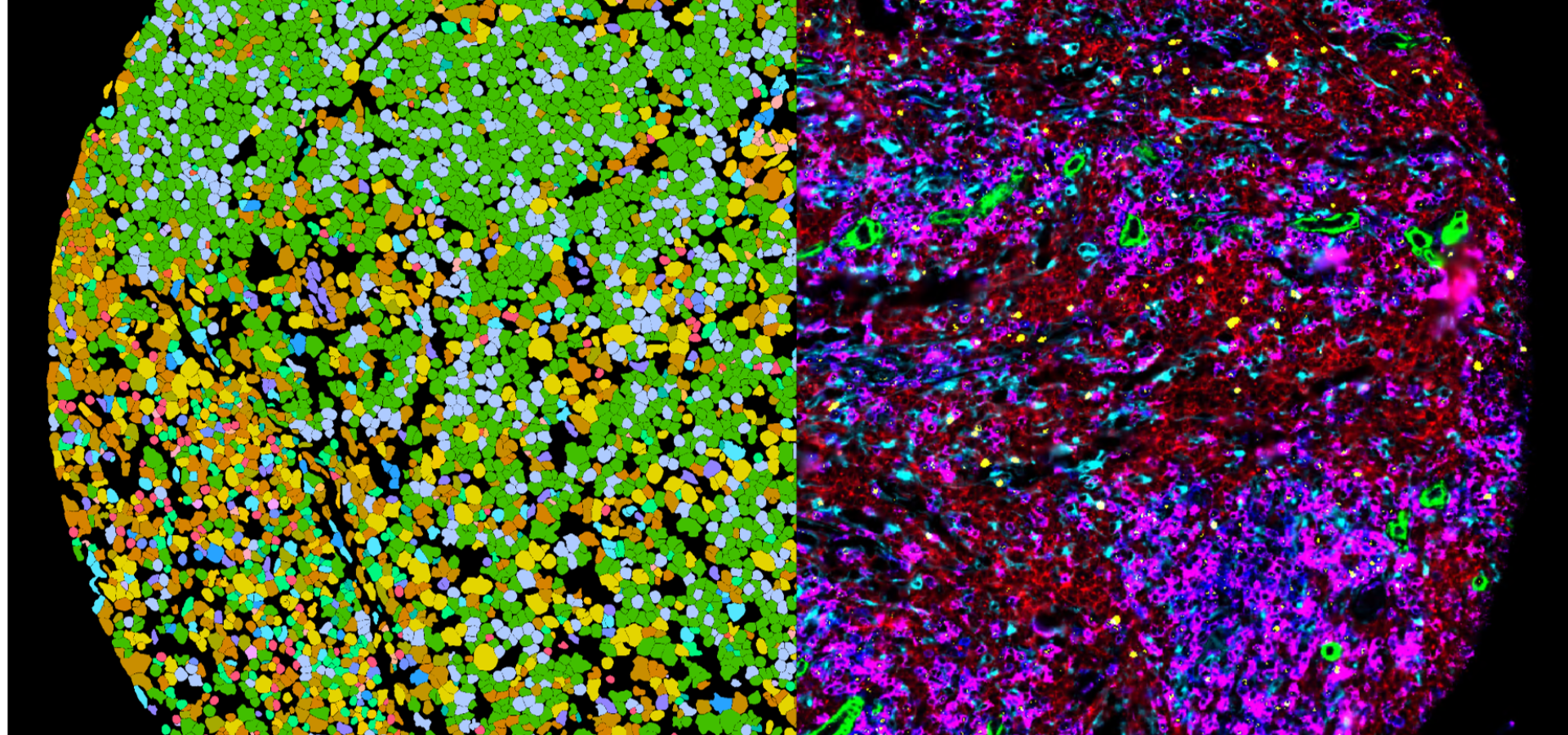
Zurich Precision Oncology Consortium (ZPOC): INTeRCePT 3.0
Dynamic, individualized risk prediction to improve lymphoma treatment
Goal: to develop personalized treatment strategies for patients with lymphoma through dynamic, individualized risk prediction.

Oncology
INTeRCePT 3.0 in Brief
Understanding lymphoma over time instead of measuring it at single points
- Analyzes more than 1,000 tumor and blood samples before and during therapy
- Combines high-resolution single-cell and multi-omics technologies with liquid biopsy analyses (ctDNA)
- Uses machine learning models for dynamic, individualized risk prediction
- Validates the models in a prospective clinical trial
Lymphoma progresses very differently from patient to patient. Whether a treatment is working often becomes apparent only late in the course of the disease. Conventional studies usually look at individual time points only, so early signs of an inadequate response or emerging resistance often go undetected.
INTeRCePT 3.0 takes a longitudinal approach to close this gap. Physicians and scientists from USZ, UZH, ETH Zurich, and EMBL analyze tumor and immune changes throughout the entire course of the disease. The aim is to use advanced computational models to create personal risk profiles that show early on whether a treatment is working – so that patients can, if necessary, be switched to alternative treatments more quickly.
The Zurich Precision Oncology Consortium (ZPOC) is a consortium jointly selected by the Comprehensive Cancer Center Zurich (CCCZ), the Tumor Profiler Center (TPC), and The LOOP Zurich. Its goal is to support interdisciplinary teams from research and clinical practice that develop innovative diagnostic and therapeutic approaches for precision oncology and aim to validate them in patient-centered applications.
Following a competitive international evaluation, the project INTeRCePT 3.0 was selected for funding – a pioneering consortium developing dynamic, individualized risk predictions to improve the treatment of lymphoma.
Oncology
The Consortium

Thorsten Zenz, University Hospital Zurich, Department of Medical Oncology and Hematology.

Burkhard Becher, University of Zurich, Institute of Experimental Immunology.

Niko Beerenwinkel, ETH Zurich, Institute for Biomedical Engineering.
Valentina Boeva, ETH Zurich, Department of Computer Science.
Marco M Bühler, University Hospital Zurich, Department of Pathology and Molecular Pathology.

Wolfgang Huber, EMBL Heidelberg.
Andreas Moor, ETH Zurich, Department of Biosystems Science and Engineering .
Virginie Uhlmann, University of Zurich, Department of Molecular Life Sciences.